
General Cell Lines and Cell Cultures


ATCC Quantitative Synthetic; Human coronavirus; Strain NL63 RNA
Quantitative synthetic Human coronavirus NL63 RNA can be used for assay development, verification, and validation as well as monitoring of day-to-day test variation and lot-to-lot performance of molecular-based assays. The quantitative format allows for the generation of a standard curve for quantitative PCR (qPCR) to determine viral load. This preparation includes fragments from NSP3 (ORF 1A), Rdrp (nsp12), NTPase (nsp13), nsp16, spike protein, nucleocapsid, and 3’ untranslated regions.



ATCC Ureaplasma parvum
Ureaplasma parvum strain U26 was isolated from a pregnant woman. This strain requires an additional 5-10% horse serum added to the broth for growth.

ATCC Mammary Epithelial Cell Basal Medium
Mammary Epithelial Cell Basal Medium is a sterile, phenol-red-free, liquid tissue culture medium designed to support epithelial cells derived from a normal patient's breast. Mammary Epithelial Cell Basal Medium contains essential and non-essential amino acids, vitamins, other organic compounds, trace minerals, and inorganic salts. To support the proliferation and plating efficiency of mammary epithelial cells ATCC PCS-600-010, Mammary Cell Basal Medium must be supplemented with the Mammary Epithelial Cell Growth Kit (ATCC PCS-600-040). ATCC’s Human Mammary Epithelial Cells cultured in Mammary Epithelial Cell complete medium (basal medium plus growth kit) is an optimal serum-free culture model for many research areas. Common uses of HMEC include the study of breast cancer development, three-dimensional culture, and carcinogen screening.

ATCC TRAMP-C2; Prostate Adenocarcinoma; Mouse (Mus musculus)
For-profit Organizations: For every order of this item, you must work directly with the contributor, Baylor College of Medicine to (i) negotiate a research-use license, and/or (ii) have the contributor provide authorization to ATCC to ship this item under your existing license. We cannot ship this item until we receive communication directly from Baylor College of Medicine that we are authorized to ship each order.We are providing the following contact information, but this information may change without notice:Baylor Licensing GroupPhone: (713) 798-6821. Once ATCC has received authorization from Baylor College of Medicine, your order will be reviewed, and this item will be released for shipment if all requirements are met. If you need assistance with your order, please contact our Customer Care team.

ATCC Synthetic Sapovirus; RNA
Quantitative synthetic RNA for Sapovirus can be used for assay development, verification, and validation as well as monitoring of day-to-day test variation and lot-to-lot performance of molecular-based assays. The quantitative format allows for the generation of a standard curve for quantitative PCR (qPCR) to determine viral load. This preparation includes fragments from the RNA-dependent RNA polymerase, VP1, and polyprotein regions.


ATCC LS 180; Colorectal Carcinoma; Human (Homo sapiens)
LS 180 is a cell exhibiting epithelial morphology isolated from the colon of a White, 58-year-old female patient with colorectal. This cell line was deposited by Northwestern University.

ATCC Quantitative Genomic RNA from; Human rhinovirus 1A; Strain: 2060
Quantitative Genomic RNA from Human rhinovirus 1A strain 2060 can be used for assay development, verification, and validation as well as monitoring of day-to-day test variation and lot-to-lot performance of molecular-based assays. The quantitative format allows for the generation of a standard curve for quantitative PCR (qPCR) to determine viral load.

ATCC DMS 79 ; Small Cell Lung Cancer; Human (Homo sapiens)
DMS 79 is a cell line that was isolated from the pleural effusion of a 65-year-old, White patient with carcinoma. This cell line was deposited by OS Pettengill, G Sorenson, and can be used in cancer research.

Biolog Inc BRU, LKV, PEA - Brucella Blood Agar, Laked Brucella Blood Agar with Kanamycin and Vancomycin, Phenylethyl Alcohol Blood Agar, 3 Plates/Pkg
This item has a minimum qty of 5 per supplier requirements.
3-plate convenience package containing 1 each of Brucella Blood Agar (BRU), Phenylethyl Alcohol Agar (PEA), and Laked Brucella Blood Agar w/ Kanamycin and Vancomycin (LKV) in a single package. Media are prepared, dispensed, and packaged under oxygen-free conditions to prevent the formation of oxidized products prior to use.BRU, LKV, and PEA media may be utilized in the initial set up of clinical specimens to aid in the isolation and identification from mixed flora samples. BRU is a non-selective general enrichment medium supporting broad spectrum anaerobic growth. PEA is a selective medium that inhibits facultative gram-negative rods and swarming of some Clostridium & Proteus species. LKV is an enriched, selective, and differential medium for the isolation and partial identification of obligately anaerobic gram-negative bacilli.
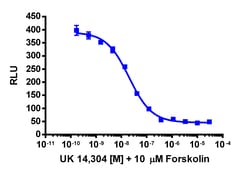
Eurofins Discoverx cAMP Hunter CHO-K1 ADRA2C Gi Cell Line, 2 vials. (95-0053C2)
The cAMP Hunter ADRA2C Gi cell line is a stable, engineered cell line for use in studying drug candidates (small molecules or biologics) targeting GPCRs. This cell line enables assessment of ligand (e.g. epinephrine and norepinephrine) based activation of ADRA2C GPCR activity via detection of decreasing levels of intracellular cAMP. This product uses EFC technology. The cells overexpress wild type ADRA2C, a naturally Gi/Go coupled GPCR. Upon activation of ADRA2C, the decrease in levels of intracellular cAMP leads to a decreased signal from EFC when the cAMP detection kit is applied. This stable modified cell line is provided as two vials of cryopreserved cells. For detailed product information, User Manual and datasheet, visit www.discoverx.com/gpcr.
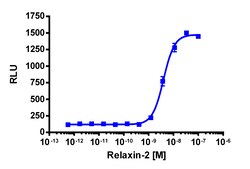
Eurofins Discoverx cAMP Hunter CHO-K1 RXFP1 Gs Cell Line, 2 vials. (95-0127C2)
The cAMP Hunter RXFP1 (LGR7) Gs cell line is a stable, engineered cell line for use in studying drug candidates (small molecules or biologics) targeting GPCRs. This cell line enables assessment of ligand (e.g. relaxin-2) based activation of RXFP1 GPCR activity via detection of increasing levels of intracellular cAMP. This product uses EFC technology. The cells overexpress wild type RXFP1, a naturally Gs coupled GPCR. Upon activation of RXFP1, the increase in levels of intracellular cAMP leads to an increased signal from EFC when the cAMP detection kit is applied. This stable modified cell line is provided as two vials of cryopreserved cells. For detailed product information, User Manual and datasheet, visit www.discoverx.com/gpcr.
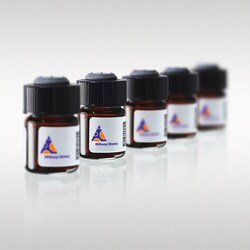
Miltenyi Biotec, Inc. CD4/CD8 (TIL) MicroBeads, mouse
CD4/CD8 (TIL) MicroBeads, mouse have been optimized for the isolation of CD4+ and CD8+ tumor-infiltrating lymphocytes from mouse tumors
Eurofins Discoverx Ready-to-Assay GPR120 Receptor Frozen Cells, 2 Vials of Cells. (HTS225LRTA)
The Ready-to-Assay GPR120 Receptor Frozen Cells are a simple, thaw-and-assay cell format for use in studying drug candidates (small molecules or biologics) targeting GPCRs. This assay assesses ligand (e.g. free fatty acids) based activation of FFAR4 GPCR activity via detection of increasing levels of intracellular calcium. The included cell line overexpresses FFAR4 alongside exogenous high levels of a promiscuous G-protein, coupling the receptor to the calcium signaling pathway. ChemiBrite cells also express a clytin variant, allowing for luminescent as well as fluorescent signal detection. Upon activation of FFAR4, the resulting calcium activity can be assayed in either detection mode. Ready-to-assay kits consist of two vials of the stably modified clonal cell line in a convenient thaw-and-use format. For detailed product information, User manual and datasheet, visit www.discoverx.com/products-applications/frozen-cells.